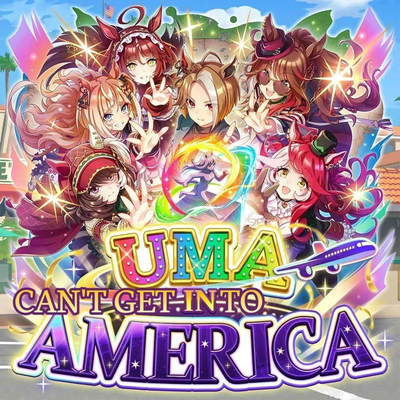
It is with heavy hearts that we must announce the cancellation of the Umamusume: Pretty Derby – 7th EVENT: THE STAGE in LOS ANGELES concerts planned for Oct 22–23, 2026.
Although we have coordinated repeatedly with all parties concerned and explored every possible option in our…
Uma 7th is cancelled because the visas didn’t come through in time. People were planning on going to this big show and are expectedly let down, like me. I am just going to write some thoughts down and hopefully that can be helpful for those coping, but also just for your information!
THE IDOLM@STER SHINY COLORScame to Canada for the first time. The cast members for Mei, Koito and Nichika were part of the group coming. They performed at the Saturday festival concert and had an autograph session, and a VIP M&G/Autograph session. Azusa Shizuki has been to Canada previously, but it was the first time for Saren Tajima and Mei Kitahara.
That alone was pretty cool, but there was also some Bandai Namco folks who came and met with fans–this time mainly Kei Umeki, who is one of the main Events manager from Bandai Namco Entertainment for the IDOLM@STER. Here is another interview where Umeki talked with the other series tantous about Ijigen Fes (with English TL).
Anyways, let’s not forget the other guests who visited Animethon in 2026–Daoko, Minori Chihara, Mas’Scar’Piece, Who-Ya Extended, and Hellbroth. Kenji Nojima rounds out the JP seiyuu side and I was able to see one of his panels for once, as it didn’t conflict with anything. I hope he comes to NYC for once for all that Banana Fish fame?
On request, I’m going to write up my panel notes for the two Fuurin panels. But first, a “quick” recap.
So from my POV, Otakon 2026 is the 27th Otakon I have attended. It is the 10th year in DC. I heard the attendance has hit its highest ever at over 47K (warm bodies). This year the music guests were the usual FF orchestra troupe, the usual K-pop acts, and an indie rock concert (cover bands and similar). It’s a choice, unfortunately it’s also a change I’m indifferent to, at least I do want to see some indie rock acts but not enough to skip out on the bountiful number of seiyuu-related programming at Otakon.
I am pretty sure Otakon 2026 has the highest number of seiyuu guests at Otaokn ever. It definitely also has the largest number of autograph sessions where you can get one from a seiyuu. And thanks to using digital registration you don’t have to camp any of them, at least not in any meaningful sense. As a result I scored an autograph from 12 different individual voice actors. Most of them were brought to Otakon to promote some show, so they were part of the autograph session from the guests for that show. This included the New Magic Knight Rayearth anime (Yoshitsugu Matsuoka, Rumi Okubo), Bookworm (Yuka Iguchi), Chiramume (Shogo Sakata), Overgeared (Tatsumaru Tachibana), Romelia War Chronicle (Yuna Nemoto), Trigun Stampede (Chika Ayamori), and Roll Over and Die (Ayaka Nanase, Machico). There were other anime titles that brought their teams and I wasn’t able to go to those due to conflicts: World’s Strongest Rearguard (no seiyuu), Kaiju Girl Caramelise (no seiyuu), Tougen Anki (Kazuki Ura, Shogo Sakata), Ghost in the Shell (2026) (no seiyuu), The World Is Dancing (Simba Tuchiya), and Kagurabachi (no seiyuu). I might be missing a few? Apologies if I did.
Anyways, this is as if we took the Anime Japan-style of AX loadout and repurposed it for Otakon, in Otakon style. Everyone got their day in the panel rooms, their autograph sessions, and the usual panel content US con goers are familiar with, and it was good because you didn’t need to do much if any camping. This is all on top of “actual convention seiyuu guests” Ryotaro Okiayu, Kenji Nojima (both Aoni), and of course Ayaka Fukuhara (Across). To put things into perspective, an average Otakon with those 3 would already be an good meal for someone like myself.
In historical terms, at least for as long as I’ve been tracking North American anime cons, this is likely the only time we’ve had a bounty this large in terms of voice actors giving out free autographs. I personally have gotten 13 (one repeat) autographs, and since I don’t have any actual recorded data to go by, the only thing that could exceed it is during some of the older Anime Expo days when a lot of companies also brought their cast members for autographs. In terms of actual seiyuu attendance Anime Expo even this year brought about as many, so this isn’t something so extraordinary. It is just extraordinary that it is happening outside of a completely corporate anime convention like AX or ANYC, and other than Otakon I can’t imagine another convention could have handled it this well.
Which is to say everything turned out well, nothing got too sweaty, and we had over FOURTY SEVEN THOUSAND people. If there was an example of how things should be done at anime cons for planning for JP guests and autographs, Otakon 2026 is it. Technology is a force multiplier. Small cons under 30k have no excuse anymore to sweat jam your autograph sessions and block them from guest panels! Invest in your attendee’s time and experience! We don’t go to cons to stay in lines! Sometimes I feel like I’m like Myne when it comes to this aspect of cons.
I saw someone pass along a large google doc detailing all aspects about what happens when you go to an Uma concert in Japan as a “survival guide” for the Los Angeles leg of Uma 7th. I’m like, hold my beer.
First, here’s the official post on the LA stop. It has all the details for a reasonable person to make it to the show. I’m assuming you read it. Good.
I will assume you’re a shut-in who’s never been to a concert in the USA, or another country’s concert for that matter. You know how to get to LA Live (the entertainment complex where the Peacock Theater is located) by car and you can get there by car, have a credit card (AMEX), and have enough money to pay for everything like an average person and conduct yourself in society like an average person. And on that note, I’m not going to write for things that someone coming from out of town will need (like hotels and how to book a plane ticket or things like that), I assume if you’re doing that you are advanced enough to know “how to survive” a concert trip.
In this case, the first thing to decide is do you even want to go? Concerts are kind of involved. If you are not at a level to be able to be around a few thousand strangers cheering on some Japanese voice actors performing a stage event and sing Umamusume songs, you might want to watch the online stream instead. For that matter, anyone who doesn’t want to spend the money to travel (for me, two VIP tickets are still cheaper than my flight + hotel costs combined), staying home is perfectly nice and better than being goaded to go to the show. I will assure you while going in person can be a great experience, you can also have a great experience not going in person. I enjoyed many watch parties in my short stay on Earth thus far too. For that matter, it’s likely that at least one person who will be at the venue will go home with a bad time. It all comes down on how you execute. Can you execute? Are you confident? Maybe? The cheat code to this is to go with a friend or SO. It’s just like anime cons in that regard–more the merrier, and you can split some of the cognitive and monetary burdens, maybe.
Once you decide that you are going, great. See you there?
Ticketing
First, you want to get tickets. I’m going to assure you that for a majority of the attendees, being there is more important than having a good seat. To me, this kind of a concert in America is extremely special. Otaku content (not counting, say, Sailor Moon) with the full-blown, seiyuu idol treatment (17 is a lot for America!) is a first-in-history type of thing. Being a part of this odd otaku history to me is the main thing. So basic things first–create and an AXS account. Try to buy tickets on another show at the Peacock Theater (not to actually buy, but learn the process). You might have to disable VPN and AdBlock.
If you want to fight the ticket sales war, you need to have an AMEX to pay for the ticket on the July 23 presale at 10am Pacific time. It’s not certain if all seats will be available at the various presale rounds and how many you can buy per sale. If you aren’t sweaty about having the best seat, you should still be able to buy tickets during the other rounds of presales (promoter and venue both have rounds of presale on July 27, and July 28 is public sales start). I personally don’t think it will sell out quickly, and it might not even sell out completely, because they’re using most or all of the seats and it’s on a Thursday and Friday. I think it could still sell out, but unlikely right away.
In any event, deciding to go soon is a boon, so you can purchase tickets right away. So you do, just log in to AXS up to 30 minutes before ticket sales start, and it should put you in a queue for the tickets. Once you pop out of the queue (it’s your turn to buy the tickets), you can’t auto select seats, so manual pick the seats you want, then check out with your AMEX (assuming it’s during the AMEX presale round onward from July 23). You’ll need to do that for each of the two shows. And that’s it for tickets.
If you want to get sweaty, I won’t get into this, but there are definitely ways! Don’t resort to illegal means! But, if you failed to purchase tickets from AXS/Peacock directly, in the USA 3rd party ticket sellers are just as good. If you don’t need a VIP seat I would be okay scalping it from the usual large ticket reselling platforms like Seatgeek or Stubhub. For VIP tickets, it will depend on how they handle distributing the VIP bonus merch, but it might also work fine second-hand.
With tickets in hand, the rest of it is the “survival part” and I will sort it based on importance. Some of it, IMO, is super important, but not important in terms of, say, health or safety. So they’re in the “optional” or “semi-important” category. You get my gist?
Important Items
Make sure you are physically capable to handle a concert. This means you’re not ill, and any physical disability can be accommodated with the venue (you can reach out to the venue in advance to make arrangements or ask questions about disability related accommodations). I expect the concert to run for about 2 hours. If none of those clears, maybe consider not coming and stay somewhere you’re comfortable. If you are going both days, you’re not going to sleep early after Thursday since it ends kind of late! Keep all of that in mind in terms of your physical condition please. And yeah, don’t come to the venue smelly, do your hygiene. Precious ???? are going to look upon your countenance, so keep that in mind when you present yourself at the venue.
Make sure you read the rules and regulations for Peacock Theater and from Cygames about this show. If you need to bring any accommodations, make sure it is allowed into the venue, such as any medication or fluids. Peacock theater itself sells refreshment inside the venue. The bag policy is no bags larger than 14 x 14 x 6 inches, and no glass/aluminum bottles. No outside drink or food is allowed other than made exception by guest services (for ADA) and unopened plastic bottles of water 1L or smaller.
As of this writing Cygames has not posted anything about rules for this show, so stay tuned. If you are curious, in Japan, they don’t allow UOs nor UO cyclones, and overly bright penlights. Recording of any kind and photography are prohibited (except during that one segment on 5th Tour, LOL). I doubt the recording part will change, but some things may be relaxed for the USA.
I recommend parking at LA Live (the underground deck, which is Lot E or East Garage), if you need parking. You might need to get there early enough, since it can run out of space. It seems like a convenient, safe, and not that expensive of a deal (40 plus tax for all day)? If you want cheaper parking you can park further but I don’t recommend it. Note that I have not parked in any of the LA Live garages on my own, but I’ve gotten in and out of cars from all those garages before w.
If you plan to show up early at LA Live to hang out, like doing some of the “optional” things listed below, then make sure you bring enough hydration and get enough rest. If you didn’t sleep enough the day before, obviously that could impact your experience. It’s all understandable, having to break out of your daily routine to go se some Horse Girls in the flesh sure makes one excited and all. Still, the point here is make sure you are in good, nay, great condition! Not only will you have a much better time when you’re feeling well, you’re more likely to not screw up executing.
If you are driving from home, make sure you budget in traffic, but I probably don’t need to tell you that if you’re driving in LA normally. If you’re an out of towner counting on an uber on the other hand, definitely take traffic into account.
On another LA note, while DTLA in general is somewhat safe, especially the area that is LA Live, you need to be aware of your surrounding at all times outside the venue. Definitely be careful when walking alone after dark outside of LA Live (say if you’re taking the mass transit or parked farther away) and avoid leaving your belongings unattended.
Lastly, don’t forget to bring your ticket. You might also want to bring something to prove your age and ID (don’t drive without your license…), and some cashless payment method (Peacock is cashless). Most AMEX credit cards support chips or Apple/Google pay these days. I assume all concert merch sales sold by Peacock event handlers are also going to be cashless, but this was not always the case IIRC. All this basic stuff you can refer to not to a google doc or a blog post, but the literal guide on Peacock Theater’s site for visitors.
Semi-Important Things
It helps a lot to know the songs at the show. It’s not important but it will immensely improve how much you get out of the show. By “know” I mean knowing how the song goes, the lyrics, and maybe even the song title? For bonus points you can know how the calls for the song goes (Umamusume build most calls into the recording itself), but you don’t need to do them. You can if you want to, but not doing calls means you can’t mess it up or tire out faster, and sometimes that’s preferred, YMMV.
Your best bet is look around online for a prediction setlist. The only two songs I’m counting on to happen is UMA IN AMERICA and Umapyoi Densetsu…or Umapyoi Legend if we get the English version. More likely I think we’ll just get the same classic hits they have always done, just taking the best old songs from 7th Ariake.
It helps to have something to cheer with. If you’ve never been to a concert before, having a pen light is a huge clutch. In 2026 you can buy one off Amazon, so I’m assuming you know where to go to get one. If you got one from another concert, hell, nobody says you can’t bring it to Umamusume. However, it would be great if you just got a generic, unbranded one or buy an Umamusume one for this concert. You should be able to buy one at the venue (queues and stock willing). If you want to get sweaty and mail order one from Japan, the official carrot blade seems to always be in stock (15 days lead time). You’ll need a proxy or something, just to be aware.
Cheering with just your hands is what I always recommend. You really do not need to bring anything, which is why this is “semi-important.” Some songs have clapping, others just need you to wave them in the air (in a way that is considerate to your neighbors).
Bring other cheering goods if you have them, and hopefully they’ll just sell it at the venue. Just be aware of Peacock Theater’s rule about banners if you’re rolling that route.
For the same reason why it’s good to go to the show with friends, socialize with other trainers at the venue. Maybe it’s the people in the seats near you or before the show. Obviously don’t get creepy about that but just be nice and helpful is always good.
Buying merch is semi-optional. Well okay it is entirely optional, but we want to support the concerts and this part of the Umamusume business. Unlike gacha or buying carots you actually get something in return. It is good culture. Just don’t get too sweaty and compromise your experience at the Umamusume concert over this!
Completely Optional Things (That May Be Important)
Cosplay is completely optional. The only thing I beg is for cosplayers to observe Time Place Occasion rules. Don’t go into the venue with a bulky cosplay and block the views of people behind your fake ears or something. It’s just inappropriate when you cross that line.
On that note, if you have a towel, a uchiwa, or something like that, please refrain from raising them over your head. Thanks, the person behind you says in advance.
Hanging out and socializing with friends before the show is completely optional. Half the time with these Peacock Theater otaku events I do hang out with people before the show, since I got nothing to do, as I’m across the country from home. The locals might still pull up 30 minutes before the show, park, and get inside 10 minutes before start time. LA is infamous for traffic, so take that into account if you’re not the one driving, too.
Flaunt your itabag/itashas/itachari/itawhatever. If you’re into them you know. If you’re not you can just ignore this. Just make sure you don’t get into trouble trying to secure it or bring it to the venue.
Flaunt your nuis or dolls or whatever.. If you’re into them you know. If you’re not you can just ignore this. Just make sure you don’t get into trouble trying to secure it or bring it to the venue.
Take photos with your stuffed animal/horse children at the venue and your seat and all that (rules permitting).
Write a letter to the cast member(s) of your choice. I don’t know if Cygames is going to arrange this but they might have some people on staff who cares about it enough to enable gift boxes at the venue. If not, write a letter to their agency or something and detail your concert experience.
Flower stands and backstage flowers. Flower stands is a Chinese/East Asian custom that Americans generally do not do, and are not familiar with outside of funerals and weddings. Having looked into this years ago it is a major pain in the butt to do at the Peacock Theater, given what you get out of it. More importantly, BNML and Cygames has to allow this in the first place, you can’t just unilaterally do it. Backstage gifts on the other hand might be easier to do at Peacock Theater. I still recommend against it because these are not something in your control unilaterally and could cause the recipients trouble, but you can try I suppose. Definitely in the bonus round category here, it is a super extra optional activity.
Learning calls is almost completely optional I would say, but it is. It’s definitely a tier lower than “learn the songs” at any rate. Because Umapyoi Densetsu exists and it’s the most Umamusume thing in the world, the only call that you should learn in advance is the “ore no aiba ga” call from that song. And even then it’s okay that if you don’t. More specifically, learning calls is something you do over time by going to concerts. You can read about it, sure, but until you’ve gone to one of these things you probably would have no real idea how it goes–and I’m not even sure 7th LA would count, since the calls are likely not at the same level as calls in Japan. But Uma fandom is a little less hardcore I would say, so I expect the excited Trainers in America (along with our Japanese Trainer friends flying to the States) will give the cast the same loud welcome during their performances. You earn lots of brownie points if you watch the live streams, follow the call guides, and learn it on your own (or with friends), but it’s literally just brownie points. More over, if you’re quick-witted you can probably do most of the calls just by following the audience and having some basic understanding of calls, while knowing all the songs.
My approach to this is not so much, don’t do these, but trying to make it so that we strip out the extra stuff so we keep our eyes on the real prize. If you want to do the optional things, great, but do remember they are optional and shouldn’t ever cause problem for the more important, non-optional side! If your condition suffers because of these extra optional stuff, then it might not be worth it. Take care of yourself first.
(Minor update from 7/29/2026. Tickets are all on sale now, as with the JTB tour pack lottery which ends today. Day 1 still has tickets for sale directly from AXS, while day 2 seems to have sold out (for now). I also clarified some text and fixed some typos.)
It’s the signs of the times. When you reinterpret the glittering future of idol life in 2026, with the words of a 2014 film, you don’t get a masterpiece from A1 Pictures or Trigger or Cloverworks, you get something like a bunch of heroines in a, uh, school? My Idol Academia can’t be this light-novel coded. My little sister…uh, what is the equivalent to a buttery lobster here? The tsundere is too dere and tsun?
In the second numbering concert for the sub-brand, Gakuen IDOLM@STER hauled out its budding-star lineup once more and put on a great performance. It’s getting absurdly good by josei seiyuu standards that I think the show itself has aspects that can stand alone. Forget that it has a video game (and it’s even fun, I mean, who doesn’t like Slay the Spire). Just watch Yukari Amane’s MY STAGE performance and let me know how you think? Actually, watch the music video and the vtuber version of each first if you have the time. Seriously, I want to know what people think.
In a grab bag situation with over a dozen heroines, do you even need the rest of the media mix? I guess so, because it’s how everything is put together. But first, links.